

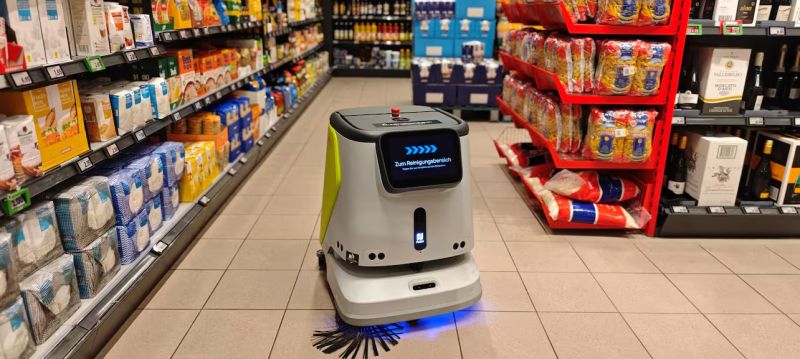
High-traffic convenience stores don’t have a cleaning problem. They have a consistency problem.
Spills don’t stop. Foot traffic doesn’t slow down. And expecting teams to maintain spotless floors every hour—while serving customers — is where most operations break down.
That’s where automation starts to make sense. And more importantly — where it has to actually work.
Why the PUDU CC1 Fits the Convenience Store Environment
The PUDU CC1 isn’t just a cleaning device. It’s a managed cleaning system built for real-world environments.
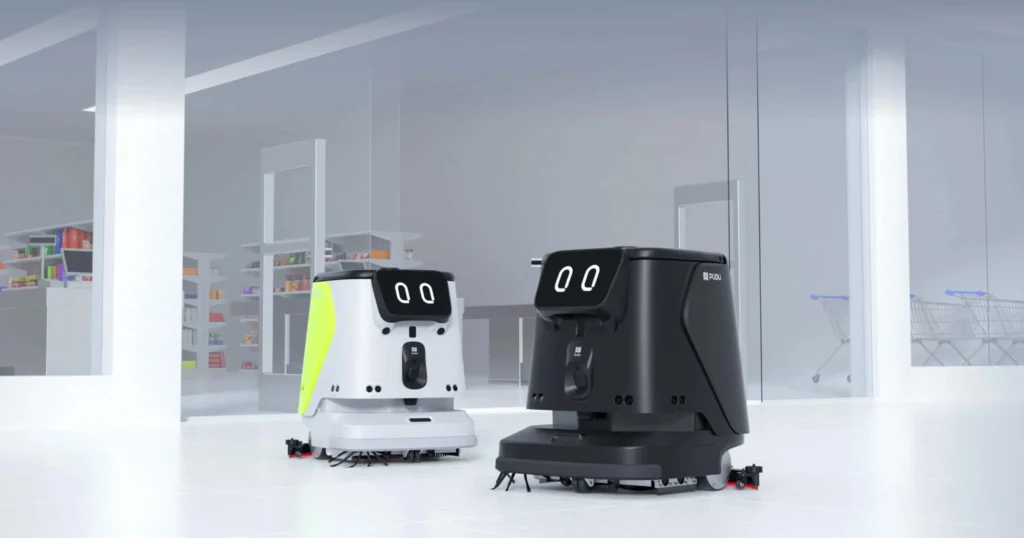 It combines:
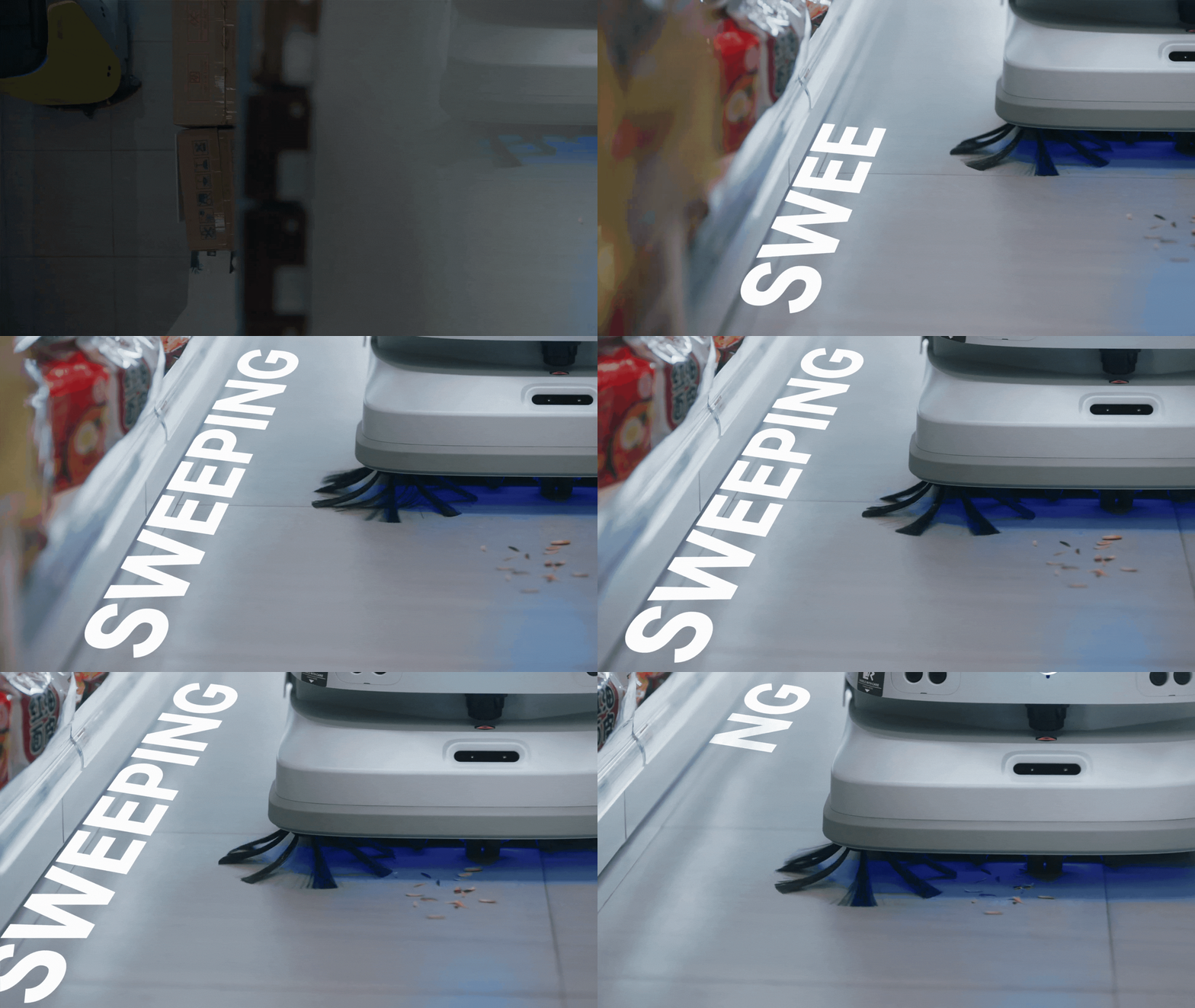
- Sweeping
- Scrubbing
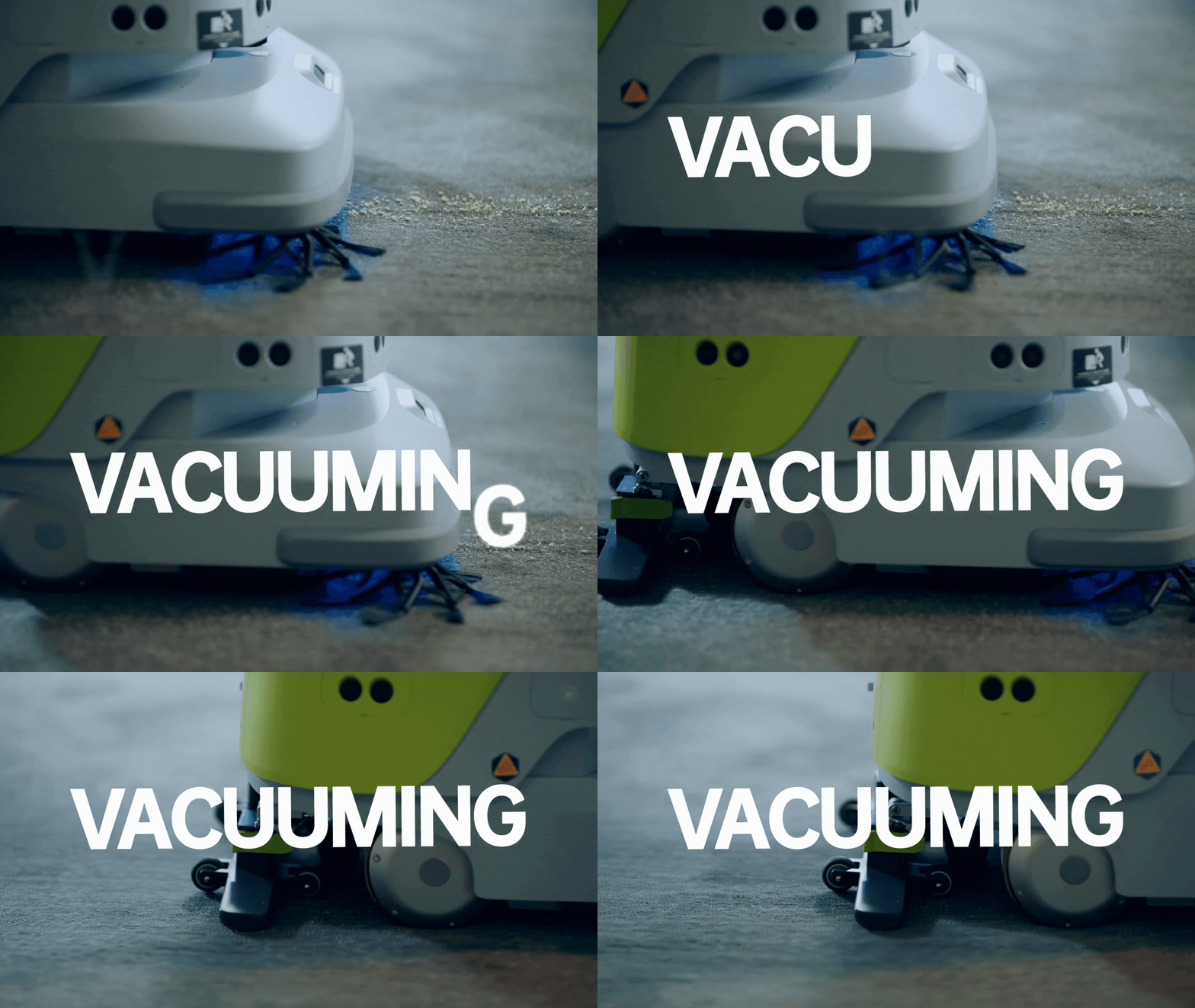
- Vacuuming
- Mopping
Into one autonomous workflow. With automated docking, the robot:
- Recharges itself
- Refills clean water
- Disposes of wastewater
So your team isn’t managing equipment — they’re overseeing outcomes. And that’s the shift most operators are actually looking for.
The Reality Inside a QuikTrip Store
Typical QuikTrip locations range from:
- 4,100 – 5,700 sq ft (standard stores)
- ~8,000 sq ft (travel centers)
At that scale, the CC1 can:
- Clean a standard store in under an hour
- Run continuously throughout the day
- Maintain floors on a predictable schedule (every ~4 hours)
Not as a one-time fix — but as a systemized routine.
And that’s the difference between automation that looks good… and automation that sticks.
What’s Actually Happening in the Field
QuikTrip didn’t test this in one store. They scaled it.
- 1,200+ locations deployed
- Autonomous cleaning cycles running throughout the day
- Minimal staff involvement
- Consistent execution across stores
This isn’t a pilot. It’s operationalized automation.
The Operational Impact (What Actually Changes)
 This isn’t about replacing labor. It’s about reallocating it where it matters.
Typical results:
- 25–55 minutes of staff time returned per cleaning cycle
- 1.5–5+ hours per day reallocated per store
- More focus on:
- Customers
- Speed of service
- In-store experience
At scale, that becomes a measurable shift in performance—not just cost.
Why Most Automation Fails (And Why This Doesn’t)
 Most automation doesn’t fail because of the technology.
It fails because:
- It doesn’t fit the environment
- Teams don’t adopt it
- It creates more work than it removes
At Impact Robotics, we call this the automation gap.
The CC1 works in environments like QuikTrip because:
- It’s built for tight, dynamic retail spaces
- It runs without interrupting customers
- It integrates into daily operations—not around them
- It produces visible, trackable proof of work
Managed Automation vs. “Buying a Robot”
 Anyone can sell you a machine. That’s not the hard part anymore.
The real challenge is:
- Getting it deployed correctly
- Getting your team to use it
- Keeping it running consistently
- Scaling it across locations
That’s where Impact Robotics is different.
We don’t just provide robots. We deliver managed automation systems that work inside your operation.
What This Looks Like with Impact Robotics

We guide operators through a simple model:
1. Start with a Pilot
Test automation in your real environment—not a demo.
2. Validate What Works
Ensure adoption, usability, and performance.
3. Scale with Confidence
Expand only where results are proven.
The Bottom Line
QuikTrip didn’t adopt robotics because it was new.
They adopted it because it works:
- In real stores
- With real teams
- Under real conditions
And when done right, automation doesn’t replace your workforce.
It supports it, stabilizes it, and frees it up to focus on what actually drives the business forward.
Ready to See What This Could Look Like in Your Stores?
We’ll help you:
- Identify the right use case
- Run a real pilot
- Validate results before scaling
No guessing. No overbuying. No disruption.
Just automation that actually works. Schedule your Automation Assessment.