

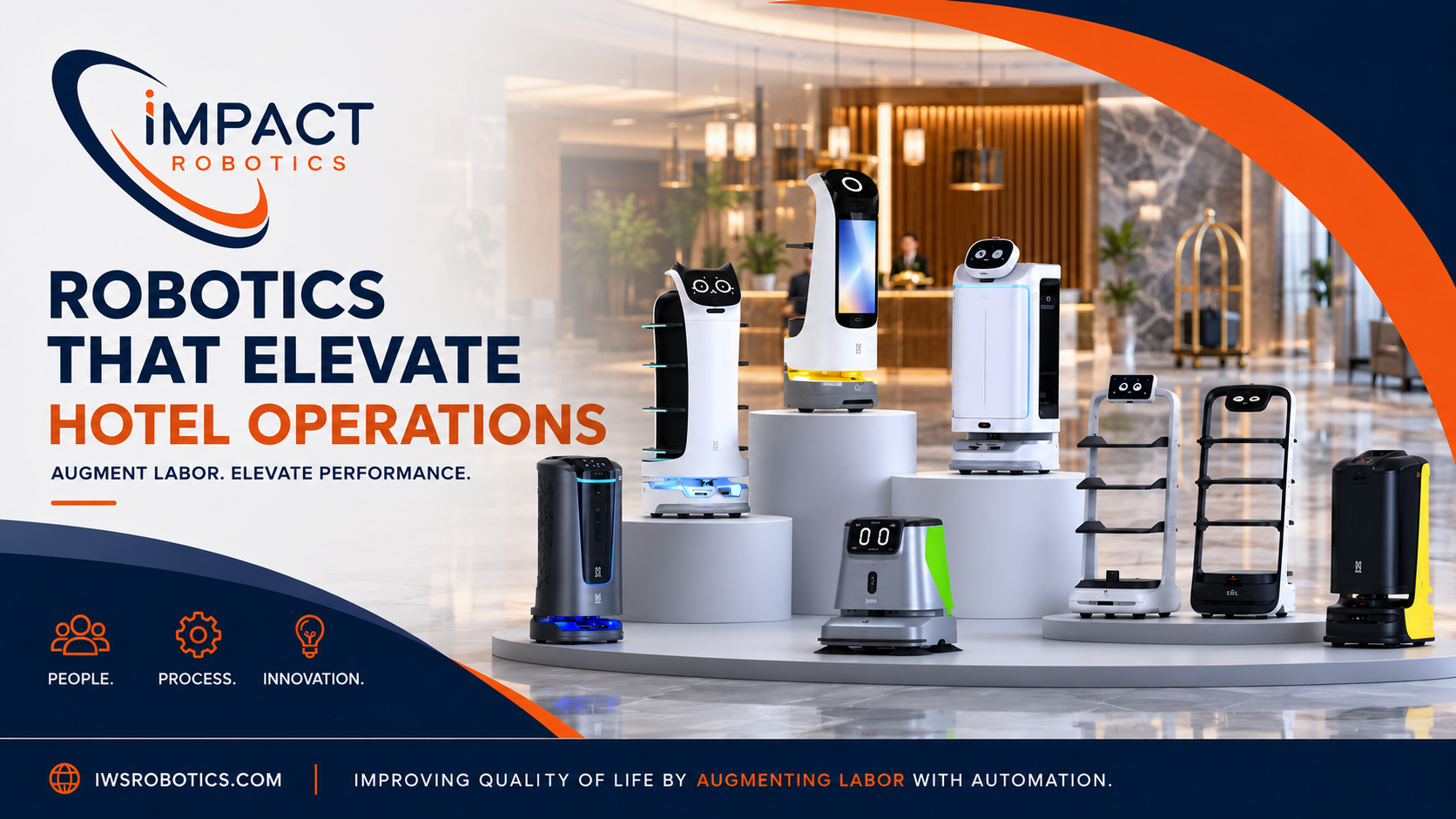
The hospitality industry has always been built on exceptional guest experiences. But behind every great stay is a team working around the clock to deliver towels, amenities, room service, clean hallways, and keep operations running smoothly.
Today, that job is becoming harder.
With ongoing labor shortages and rising operating costs, hotels are looking for ways to maintain service standards without placing even more pressure on already stretched teams. That’s why robotics is rapidly moving from an emerging technology to an operational advantage.
The goal isn’t replacing people. It’s giving them time back to focus on what guests actually remember.
The Real Cost Isn’t the Towel. It’s the Trip.
Imagine a guest calls at 2:00 AM for a towel. The towel itself costs only a couple dollars.
The real expense begins when the front desk associate leaves an unattended lobby, rides the elevator several floors, delivers the item, and returns several minutes later while phones ring, guests arrive, and security responsibilities remain uncovered.
Now multiply that scenario dozens of times every week. The labor cost isn’t the delivery itself. It’s the travel time.
Hotels are unique because every service request involves movement through a vertical building. Whether it’s towels, bottled water, extra blankets, toothbrush, razor, room service trays, or housekeeping supplies, employees spend countless hours simply moving between floors.
Those minutes add up to thousands of labor hours every year.
Labor Challenges Continue to Grow
According to the American Hotel & Lodging Association (AHLA), approximately 65% of hotels reported staffing shortages in early 2025, with housekeeping representing the most difficult positions to fill, followed closely by front desk operations.
Demand hasn’t slowed. Guest expectations certainly haven’t. But staffing levels have become increasingly difficult to maintain.
Rather than asking fewer employees to work even harder, many hotel operators are rethinking how repetitive operational tasks get completed.
Three Hotel Workflows Where Robots Deliver Immediate Value
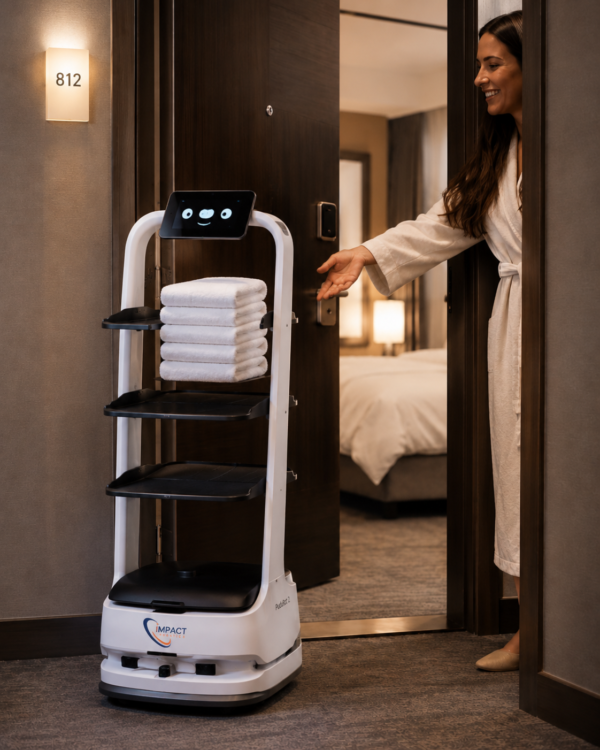 1. Guest Deliveries
Late-night amenity requests most often include fresh towels, phone chargers, bottled water, and room service. These deliveries are repetitive, predictable, and consume valuable employee time.
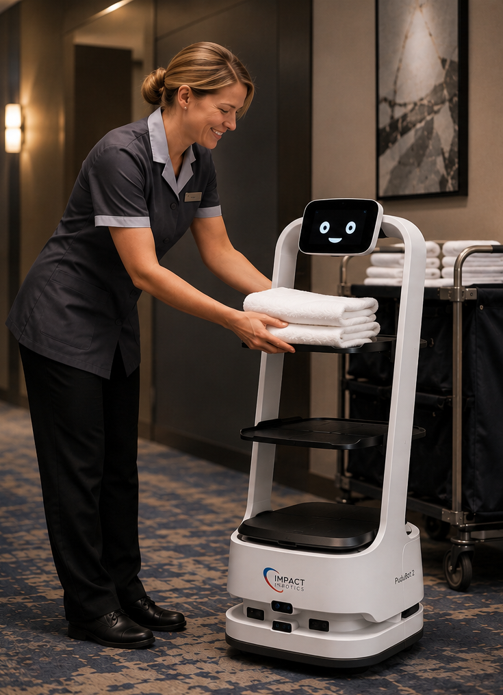
Autonomous delivery robots can safely navigate hotel corridors, deliver items directly to guest rooms, and return to their charging station without pulling front desk associates away from guests.
Major hotel brands have already completed well over one million autonomous room deliveries, proving this is no longer experimental technology. Instead of employees walking miles each shift, they remain available where they’re needed most.
2. Cleaning Large Public Spaces
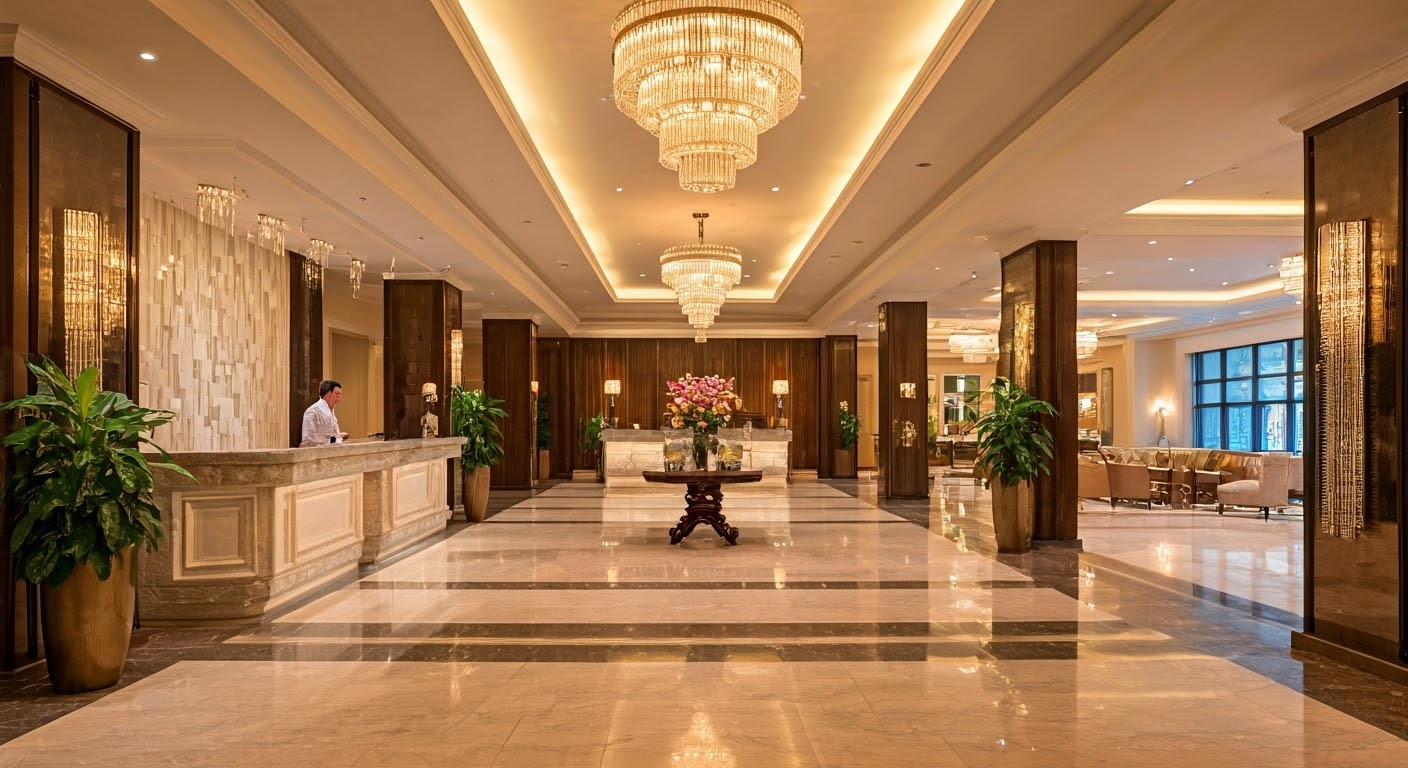
Hotels clean enormous amounts of flooring every day:
- Lobbies
- Hallways
- Ballrooms
- Meeting spaces
- Corridors
- Common areas
These spaces require constant attention but don’t necessarily require constant human labor. Autonomous floor-cleaning robots operate consistently throughout the day and overnight while maintaining cleaning standards.
For many organizations, robotic cleaning costs can be a fraction of traditional manual cleaning when measured by square footage, allowing housekeeping teams to focus on guestrooms and detail work where human attention creates the greatest value.
3. Keep Human Interaction Human
Robots shouldn’t replace hospitality. They should protect it. Guests remember:
- Friendly welcomes
- Helpful recommendations
- Fast problem resolution
- Personalized service
They don’t remember who delivered their extra towels.
When robots handle repetitive transportation tasks, hotel staff spend more time creating memorable guest experiences instead of pushing carts and riding elevators.
The Difference Between a Demonstration and a Deployment
One of the biggest misconceptions about hotel robotics is that simply purchasing a delivery robot creates value. It doesn’t.
A delivery robot that cannot independently operate the elevators is limited to a single floor. In a multi-story hotel, that’s little more than a technology demonstration. True operational automation requires robots that integrate with:
- Elevator systems
- Hotel navigation
- Building access controls
- Property workflows
- Fleet management systems
When properly deployed, the robot can:
- Call the elevator
- Ride independently
- Exit on the correct floor
- Navigate hallways
- Deliver directly to the guest room
- Return automatically
That’s when automation begins producing measurable operational results.
Measuring ROI the Right Way
Too often, organizations compare the price of a robot against doing nothing. The better comparison is against the hidden operational costs already affecting the business:
 Overtime
- Employee turnover
- Staffing shortages
- Delayed guest requests
- Front desks left unattended
- Inconsistent service during peak periods
The question isn’t, “How much does the robot cost?” It’s, “How much does every delivery currently cost?”
When measured by completed work instead of purchase price, robotics often becomes one of the most practical operational investments available.
Successful Deployments Start with Operations — Not Technology
 The most successful hotel robotics programs treat automation as an operational improvement initiative, not a technology purchase.
That includes planning for:
- Elevator integration
- Property Management System (PMS) compatibility
- IT security and governance
- Brand standards
- Staff training
- Workflow design
Many hotels begin with autonomous delivery robots because the return is immediately visible to both guests and staff, then expand into autonomous floor cleaning to reduce labor pressure even further.
The Future of Hospitality Is More Human
Hospitality has never been about carrying towels. It’s about creating memorable experiences.
Robotics simply removes the repetitive tasks that prevent employees from delivering those experiences consistently. When robots make the trips, employees stay available.
The front desk remains staffed. Guest requests are fulfilled faster. Housekeeping focuses on quality instead of transportation. That’s not replacing hospitality. It’s strengthening it.
How Impact Robotics Helps Hotels Deploy Successfully
At Impact Robotics, we help organizations augment labor with automation that works inside real-world operations, not just on a showroom floor.
From solution design and facility assessment to deployment, integration, training, and ongoing support, our team helps hotels implement robotics that delivers measurable operational value while allowing employees to focus on what matters most: creating exceptional guest experiences.
Because the future of hospitality isn’t about replacing people. It’s about giving people the tools to deliver even better service.
Ready to explore robotics for your hotel? Schedule a consultation or learn how autonomous delivery and cleaning robots can improve efficiency, reduce operational costs, and elevate the guest experience.